
In André Aciman’s novel Call Me By Your Name, we meet Elio as he looks back on the summer of 1987, when he was living at his parents’ home on the Italian Riviera, and where he spent his days reading and transcribing music. 17-year-old Elio becomes infatuated with 24-year-old Oliver, a scholar selected to help Elio’s father with his academic writing. Over the course of the summer, we see Elio’s fantasies come to fruition as an intensely sexual and romantic relationship buds between him and Oliver.
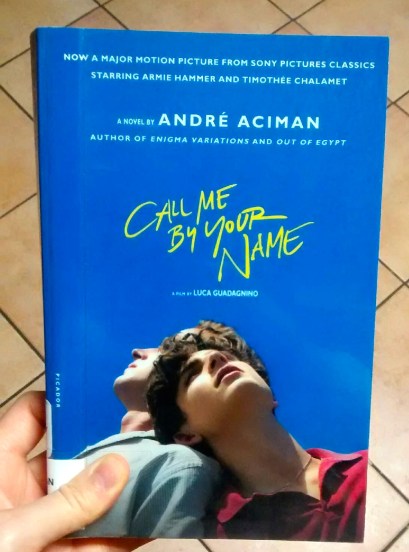
After watching the beautifully shot Oscar-winning film adaptation, I felt compelled to pick up the book, and I am so glad I did.
The film captures the essence of the book very well, from the relaxing nature of the family’s summer spent in Northern Italy, to the passionate feelings Elio and Oliver develop for one another, feelings that are initially masked with indifference.
While the film is loyal to the book, the book delves much deeper into their love story. Through Aciman’s introspective and elaborate prose, we are planted directly inside Elio’s mind, understanding the thought patterns behind his every action and feeling. You, the reader, become Elio. You feel the aching and longing he feels for Oliver. You feel just as tortured and obsessed and plagued by these inescapable thoughts and desires. The flowery, convoluted, and verbose language, while exhausting at times, works to make you understand Elio’s frustrations and excitement, as he comes of age and experiences a sort of sexual awakening.
Additionally, there are a few powerful scenes in the book that are not portrayed in the film, particularly towards the end. Both the ending of the film and the ending of the book will make your heart ache but in totally different ways. The book’s ending offers more closure, but in a way that almost feels like a tease. It jumps ahead by several years, conveying both the hindsight and heartache that come with the passing of time. The movie’s ending, on the other hand, remains in the 1980s, and feels totally desolate and hopeless, but perhaps leaves a little more open to interpretation as far as Elio’s and Oliver’s futures go. And Timothee Chalamet’s incredible performance in that final scene manages to wrap up nearly every sentiment that Aciman depicts in his novel.
This story of Elio and Olver is painful and beautiful in the way that stories that capture the fleeting of time usually are. As Elio acknowledges, “time makes us sentimental. Perhaps, in the end, it is because of time that we suffer.” Their impermanent relationship forces you to think of all the people in your life that have left an impact – whether smaller or as large as the one Oliver leaves on Elio’s life – and how many of them you may never see again. It makes you hesitant to form connections with people for fear of losing them, but even more scared to avoid forming such connections for fear of never truly feeling alive. As Elio’s father says, “to feel nothing so as not to feel anything – what a waste!”
Just as Oliver leaves an everlasting impact on Elio, Call Me By Your Name – both the book and movie – have left an everlasting impact on me. This is one of those rare stories that I’ve carried with me throughout my day-to-day life and that I plan to revisit many times in the future.
Rating: 4.5/5
Check out Call Me By Your Name on GoodReads.
 Pawsitive Reads