
Summary:
Genevieve Wheeler’s debut novel tells the story of Adelaide, a tenderhearted hopeless romantic who loses herself to someone else.
Adelaide is in her 20s, an expat in London, and is starting a promising career in the publishing industry. She ventures into online dating and partakes in many unserious flings, until she meets Rory and falls head over heels. Rory has the charm of an Englishman and the looks of a Disney prince, and the fact that he’s a fellow bibliophile is the cherry on top. And Adelaide, being the passionate romantic she is, falls deeply.
The thing is, Adelaide and Rory’s relationship resembles more of what many would call a “situationship”, with Adelaide clearly being the more emotionally invested of the two. Rory frequently cancels dates, does not respond to texts for days at a time, and leaves Adelaide feeling confused and uneasy. But he always gives her just enough attention to keep her in his lair. And while Adelaide gives and gives of herself hoping to make him love her, Rory never quite reciprocates in the way she needs or deserves.
In fact, we learn that Rory never fully moved on from his ex-girlfriend, a woman who he also was unable to give himself to completely. It seems Rory is a bit of a commitment-phobe, and unfortunately Adelaide suffers as a result.
The story begins with Adelaide in the hospital after attempting suicide, but as it moves forth, we learn about the series of events that led her there, particularly with her precarious relationship with Rory.
Review:
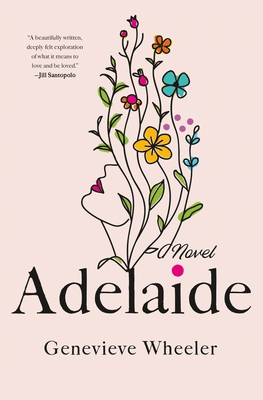
The cover features a simple line drawing of a woman’s facial profile blended with a bouquet of flowers. But don’t let the whimsical cover fool you. The central theme of Adelaide is not romance. And as the events unfold, the reader never hopes or expects for Rory to come around.
Instead, Adelaide explores the notion of losing your self-worth in someone else. It explores the intensity of rejection and heartache which, in the moment, feels impossible to overcome. It’s a story about a young woman who finds herself in the throes of depression, feeling at the end of her rope and like there’s no way out.
The story, while poignant, is a frustrating one. Adelaide’s repeated willingness to accept Rory’s mixed signals and outright disrespect is truly maddening at points. I didn’t start out hating Rory, but with every thoughtless thing he did, my sympathy for him as a character diminished – not for his uncertainty but for his selfishness in dragging someone along through his uncertainty. And I didn’t understand how Adelaide could continue to go back to him!? How could she be so blind?
But then I remembered: it’s an easy trap to fall into. Many of us often believe we wouldn’t tolerate such treatment until we find ourselves deeply attached to someone, entangled in the allure of possibilities and fantasies they bring. And when we’re pulled into the cycle of hot-and-cold, push-and-pull behavior, it deepens the unhealthy attachment. This book captures that feeling of romantic whiplash perfectly.
Despite its melancholic atmosphere, the novel offers glimmers of hope. Adelaide learns and grows from her experiences, and the friends she leans on to help get her through are genuinely inspiring.
I loved this story not only for its vulnerability and relatability, but also for its accessibility – it’s the kind of book you can easily read in a sitting or two. Having recently traveled to London over the summer, the setting and references to certain locations were fun to read about, in spite of the seriousness of the subject matter.
Adelaide is a worthwhile read for anyone whose navigated the dating world, suffered from unrequited love or rejection, or for anyone who is simply seeking a moving read.
My Rating: 4.5/5
 Pawsitive Reads